Someone asked me a while back if I’d rather forgive or be forgiven.
I wasn’t sure how to respond.
Now that I think about it, religion has been telling us to forgive one another for thousands of years. I grew up hearing “forgive us our trespasses, as we forgive those who trespass against us.” But I don’t remember spending much time thinking about which half of that sentence was harder.
There have been people in my life who knowingly did things that hurt me. Some of the feelings about those things I still carry around.
But I’m not sure I’ve ever purposely done anything to hurt someone else.
Then again, the hurtful things we do to other people don’t have to be intentional. Because intent doesn’t negate impact.
So, not really knowing what it feels like to be forgiven, I decided I’d rather be the one doing the forgiving. Except I wasn’t sure I’d ever actually done that, either.
At least not in any deliberate way.
I recently heard an interview with Oprah Winfrey in which she said, “Forgiveness is giving up the hope that the past could have been any different.”
The Past Isn’t Going to Change
That doesn’t mean saying what someone did was okay. It doesn’t mean excusing their behavior or necessarily reconciling with them.
It means accepting that what happened did happen and relinquishing the wish that you could somehow rewrite it.
The past isn’t going to change. Forgiveness is deciding you don’t need it to change in order to move forward.
At this stage of my life, that makes a lot of sense.
So, I recently tried it.
I told a former colleague that I forgave her for the way she treated me when it was time to let me go.
It felt good.
She appreciated it. And I realized that even though we haven’t spoken much in the past 10 years, she and I still have a bond forged during the years we worked closely together.
Low Bar
But afterward, I kept thinking about that original question: Would I rather forgive or be forgiven?
Forgiving my former colleague was surprisingly easy. Maybe because I was the one holding the cards.
I got to decide what I was ready to let go of. I got to say the words. And in doing so, I got to loosen the grip that an old hurt still had on me.
Being forgiven is different.
I said earlier that I don’t think I’ve ever purposely hurt someone. But that’s a pretty low bar, isn’t it?
Surely, in 66 years of being human, I’ve hurt people.
Maybe I said something carelessly. Maybe I wasn’t there when someone needed me.
Maybe I made a decision that was right for me but painful for someone else. Maybe someone is carrying a memory of me that I wouldn’t even recognize.
That’s an uncomfortable thought.
Because being forgiven requires me to acknowledge that my version of a story may not be the only version. I don’t get to decide that someone wasn’t hurt simply because I didn’t intend to hurt them.
You Can’t Rewrite the Story
And maybe Oprah’s definition works in both directions.
If forgiveness means giving up the hope that the past could have been different, perhaps the person who caused the hurt has some letting go to do, too.
I can’t go back and unsay something I wish I’d said differently. I can’t show up for a moment I missed.
I can’t make a different choice knowing what I know now. I can’t go back and be the person I wish I had been in someone else’s past.
I can apologize. I can take responsibility. I can try to do better.
But I can’t rewrite the story either.
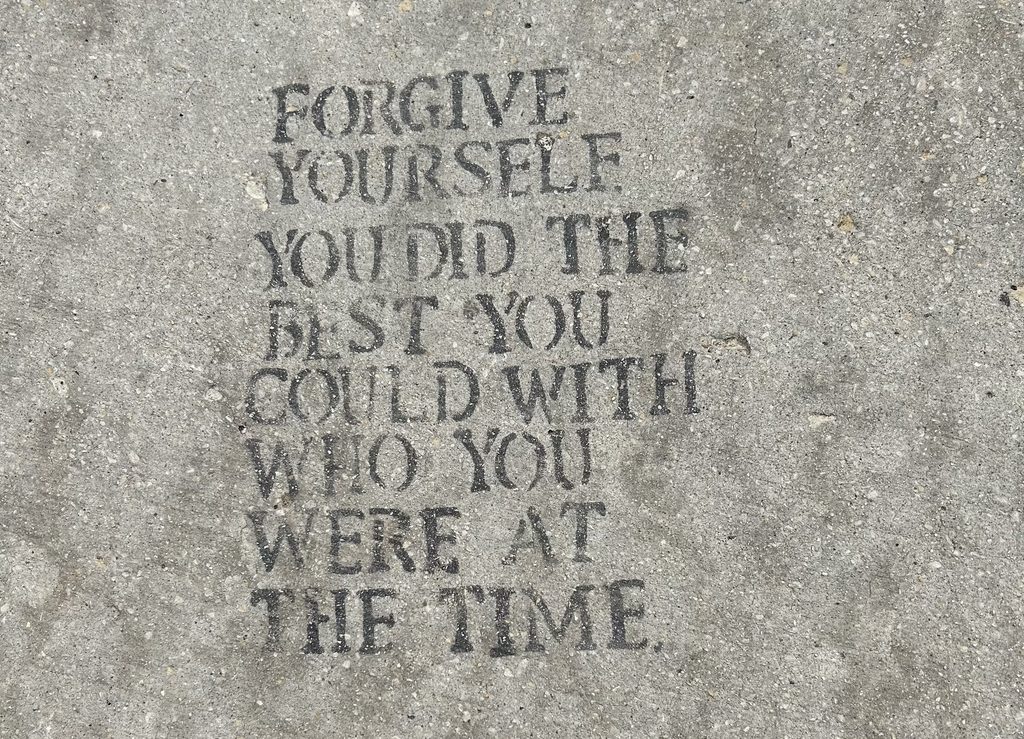
Maybe being forgiven means accepting that someone else was hurt by the person I was in that moment—and forgiving myself for not having been someone different.
So, would I rather forgive or be forgiven?
I’m no longer sure.
Maybe, if we’re lucky enough to live and love and work alongside other imperfect human beings for a long time, we eventually need to learn how to do both.