
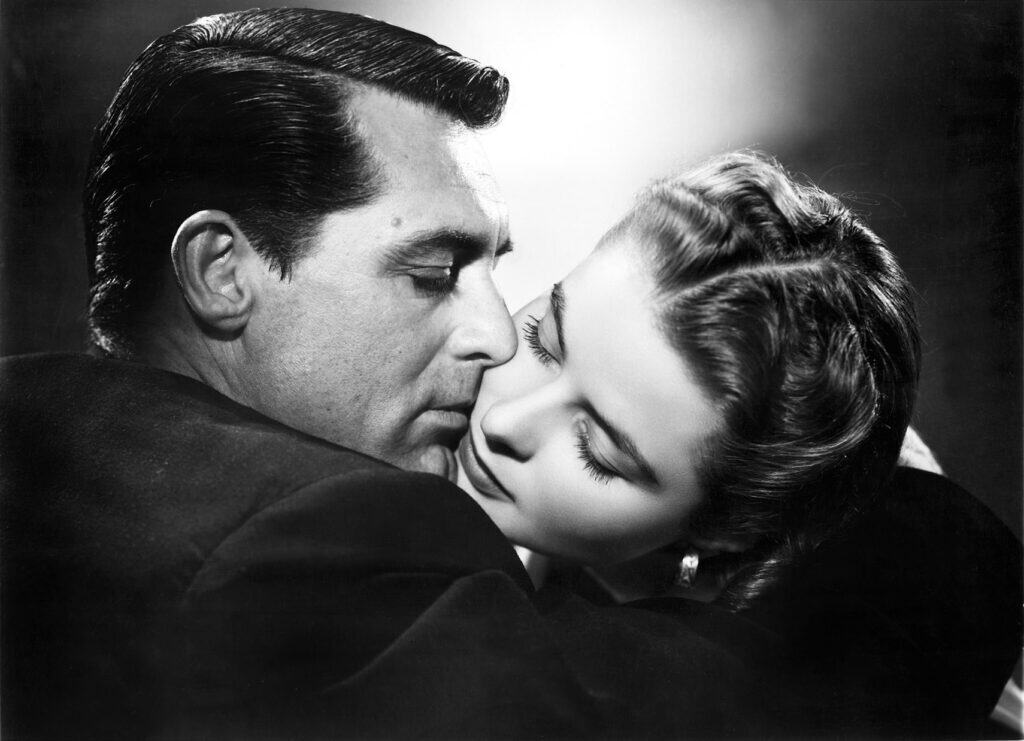
Before there was uranium hidden in wine bottles, before there was that legendary two-minute kiss, there was a short story in The Saturday Evening Post.
In 1921, John Taintor Foote published “The Song of the Dragon.” Decades later, it became the foundation for one of Alfred Hitchcock’s most emotionally compelling films, “Notorious” (1946). Yet Foote received no screen credit.
Foote was hardly obscure. He wrote numerous screenplays, including for films like “The Mark of Zorro,” “The Story of Seabiscuit,” and “The Great Dan Patch.”
He understood drama, patriotism, spectacle. But in “The Song of the Dragon,” he offered something more intimate: moral tension wrapped in national duty.
The Plot
At its center is Sylvia—a young aspiring actress recruited to seduce a certain “Bavarian gentleman” to obtain military papers. The Germans, in Foote’s story, are attempting to subvert U.S. munitions during WWI.
We are told Sylvia succeeds. We are not told how. The details are discreetly omitted, which somehow makes the moral cost feel heavier.
The story unfolds through multiple points of view from different characters, creating a layered portrait of patriotism and sacrifice. There is moral conflict throughout, though it is couched in the language of duty.
The mission justifies the means. Or does it?
Reading it now, the gender politics feel dated. Sylvia is courageous, yes—but also instrumentalized. Her sexual appeal becomes a strategy.
Which raises an uncomfortable question: Is the recruiting character—a secret service agent—a noble patriot or something more ambiguous?
When a powerful man persuades a young woman to use intimacy as leverage for a cause, how far is that from exploitation? Patriotism can sanitize a great deal.
One Step Further
Hitchcock takes Foote’s bones and gives them flesh.
In “Notorious,” the story shifts to Brazil, and the political threat becomes post-war Nazis. But the emotional center changes even more dramatically.
The romance between the secret service agent Devlin (played by Cary Grant) and Alicia (Ingrid Bergman) is the film’s true engine.
Their famous extended kissing scene—nearly two and a half minutes, cleverly staged to evade censorship rules—isn’t just sensual. It’s suspenseful. It’s loaded.
The dialogue is also sharp, including this line:
“I’ve always been scared of women, but I get over it.” (Devlin)
And this exchange:
“This is a very strange love affair.” (Alicia)
“Why?” (Devlin).
“Maybe because you don’t love me.” (Alicia)
Love and duty intertwine until they’re indistinguishable. The mission requires Alicia to marry the enemy.
The man who loves her sends her anyway. That’s the dragon—not espionage, but emotional betrayal in the name of a higher cause.
Hitchcock’s cameo? He appears about an hour into the film, at the lavish party in Alicia’s husband’s mansion, drinking champagne before quietly exiting the frame.
Foote’s original story is spare, patriotic, morally conflicted. Hitchcock’s film is psychologically charged, erotically tense, and devastatingly human. Both wrestle with the same question:
What is the cost of asking someone to sacrifice intimacy for the sake of an ideal?
Maybe the dragon is not the oppressor, but instead the fire we ask others to walk through—and the justification we use when we let them burn.