Every once in a while, lines from a film or a book hit you with such impact that it feels almost personal—as if someone has quietly put words to a feeling you hadn’t fully articulated yet.
Recently I experienced that while watching a new film adaptation of Mary Shelley’s Frankenstein.
“My place was never in this world. I sought and longed for something I could not quite name. But in you I found it. To be lost and to be found—that is the lifespan of love. And in its brevity is tragedy.”
Those words are spoken to the creature by a dying woman in Guillermo del Toro’s Oscar-nominated film “Frankenstein.” They gave me pause.
Because whether or not Mary Shelley herself wrote those exact words, they capture something deeply true about the spirit of the story—and about my story.
Curious, Not Cruel
Most of us remember Frankenstein as a tale about a monster. But when you return to the story as an adult, the creature reads very differently. He isn’t terrifying so much as heartbreaking.
When the creature first becomes conscious, he isn’t violent or cruel. He’s curious. Observant. Almost childlike in his attempt to understand the world. He studies nature, learns language, and secretly watches a small family living together.
From the shadows he observes their tenderness, their arguments, and their loyalty to one another.
And slowly he realizes something profound.
They belong to each other.
That is what he wants more than anything—not power, not revenge, not domination.
Just belonging.
To Be Seen & Understood
The creature’s tragedy isn’t that he’s monstrous. It’s that no one ever sees who he really is. Before he can speak, before he can explain himself, people recoil. Doors close. Fear replaces curiosity.
At one point he asks Victor Frankenstein, the scientist who created him, for a single mercy: a companion. Someone like himself. Someone who will understand him and share his life.
It’s one of the most quietly devastating requests in literature.
When we strip away the lightning bolts and laboratory tables as del Torro has done in the film, Frankenstein becomes something else entirely. It becomes a story about one of the most universal human longings—the desire to be seen and understood.
That longing sits quietly underneath our friendships, our families, and especially our romantic relationships.
The Lifespan of Love
When we fall in love, it often feels as though something unnamed inside us has suddenly found its counterpart. Someone recognizes us in a way others never quite have. For a moment we feel as though we have found our place in the world.
Sometimes those connections last decades.
Sometimes they don’t.
And that’s where the line from the film keeps echoing in my mind: to be lost and to be found—that is the lifespan of love.
Not every love story is meant to last forever. Some arrive in our lives as catalysts—brief, intense experiences that reveal something about who we are and what we are capable of feeling.
The tragedy isn’t always that the love ends.
The tragedy would be never having felt it at all.
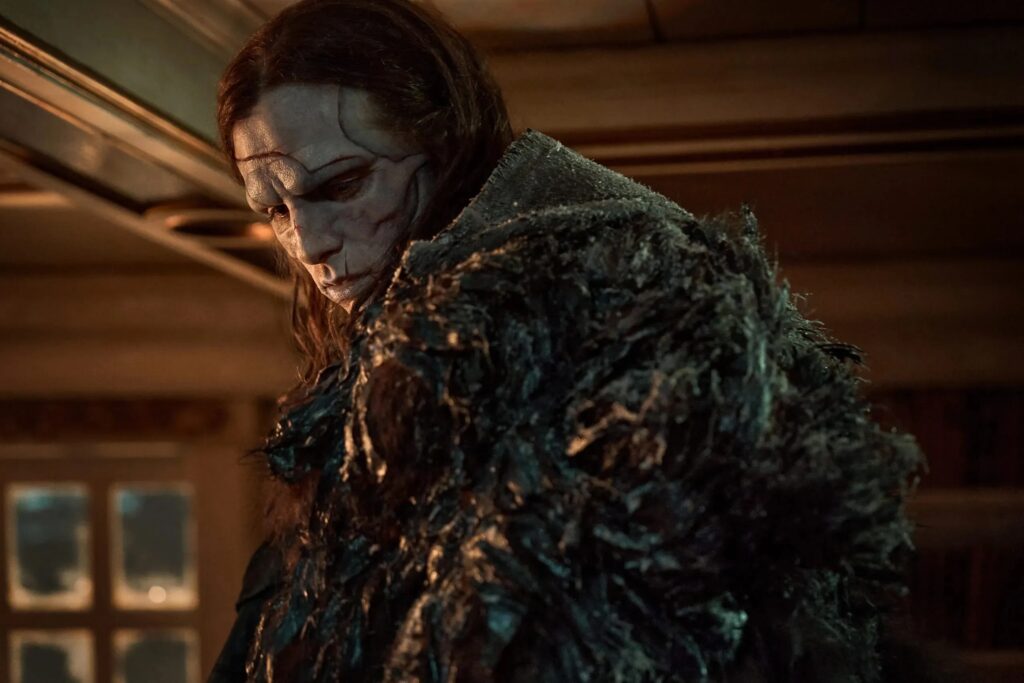
Photo from “Frankenstein” courtesy of Ken Woroner/Netflix