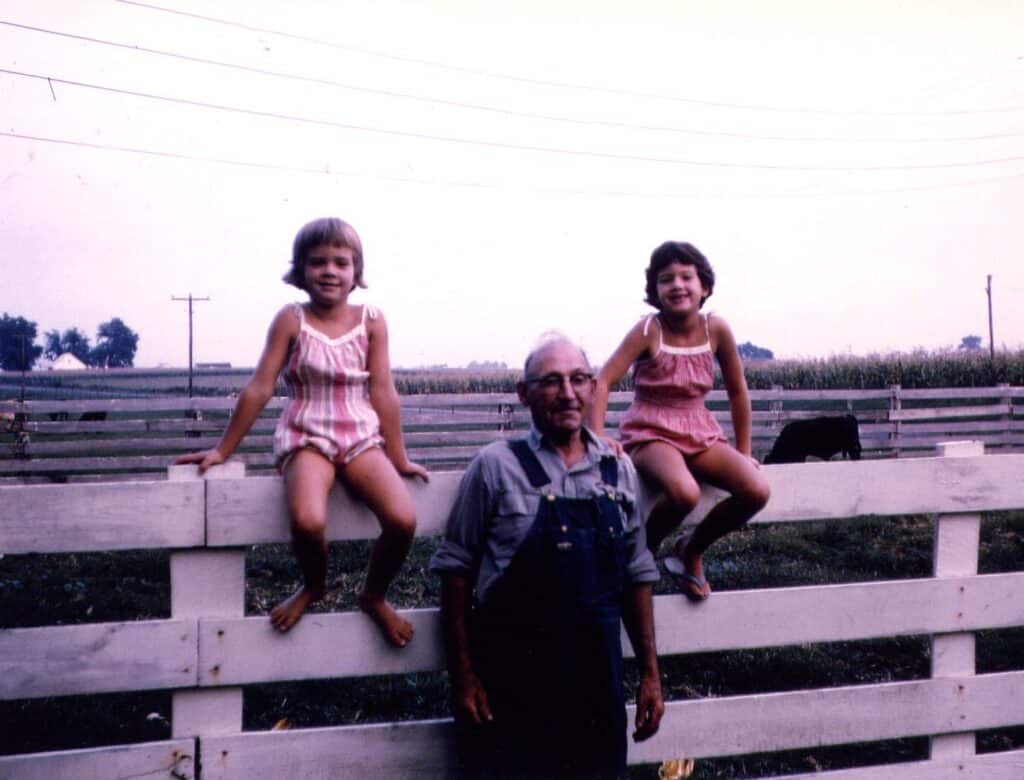
Some of my earliest memories are of their farm—the smell of the barn and chicken coop, a full hayloft in the summer and empty corncrib before harvest, the crowing of a rooster at dawn and gentle mooing of the cows at milking time.
Not only did my grandparents raise chickens, cows, and hogs, but they also had an extensive vegetable garden. Grandpa Wille would often kill a chicken in the morning that Grandma Ruby would pluck and cook for dinner, serving it with mashed potatoes, fresh corn, and green beans from the garden. And on the farm, dinner was lunch and supper was dinner.
Willie was Ruby’s second husband. My paternal grandfather, Ray, had been tragically killed in a farming accident when my dad was 15 years old.
Lost Skill
I’m sure that Ruby’s oldest daughter, my 99-year-old Aunt Wanda, could probably still pluck a chicken. But that’s a skill that ended with her generation. My siblings and I can’t pluck a chicken and neither can our kids.
In fact, our kids never experienced a family farm. By the time they came along, all that was still in the family was land that somebody else farmed for us because farming was not something my dad or his two sisters had any interest in doing.
It turns out that story isn’t unique.
Disappearance of the Small, Family-Owned Farm
There are far fewer farms in America than there used to be—millions fewer than in my grandparents’ time. And while most farms are still technically “family-owned,” that phrase doesn’t mean what it once did.
A small percentage of large operations now produce the majority of the country’s food, while the smaller, working farms—the kind many of us remember—have been steadily disappearing.
Farming has also become harder to sustain as a full-time livelihood. Most farm families now rely on income from outside jobs.
Land is more expensive, more complicated to pass down. And perhaps most telling, many farmers don’t have a clear successor.
Like my dad and his sisters, the next generation, for all kinds of reasons, doesn’t come back.
So the farm ends not with failure, but with lack of interest.
A Way of Life
What’s lost isn’t just an occupation. It’s a way of life. A kind of continuity. A relationship to land, to work, to family that unfolds over time rather than being chosen and re-chosen in the way so much of modern life is.
I don’t romanticize it. Farming is hard. Uncertain. Physically demanding in ways most of us no longer experience. But there is also something grounding about it—something that connects people to a way of life that is wholesome and real.
When I think about the farm now, it reminds me of the little girl who loved all those smells, animals, and buildings. And her grandparents, who were good, kind, hard-working people.
And while the farm itself is gone, something of it remains—in the way I measure a day’s work, in what I value, and in the quiet understanding that some of the most important things in life aren’t meant to last forever, only to shape us while they do.