Lately, I’ve been spending a lot of time working with MindClick, a company that does something our industry has long needed: it delivers real ROI data on the sustainability and health impacts of interior product choices.
And the more I dig into the numbers, the more convinced I am that we have reached inflection point in healthcare and senior living design. Because we have the research, the certifications, and market demand to support that the design of the physical environment affects the health and well-being of both people and the planet.
There is no reason not to design a healthy building.
Healthcare Facilities Shouldn’t Work Against Health
Healthcare exists to improve human health, yet historically, many healthcare facilities were not designed with environmental or human health as a central priority.
Practice Greenhealth, the leading sustainable healthcare organization in North America, works with more than 1,700 hospitals and health systems—about a quarter of U.S. hospitals. Their work to reduce hazardous chemicals, promote safer materials, and cut energy use underscores a simple truth: healthcare buildings themselves can either support health or quietly undermine it.
At the same time, WELL Certification has helped shift the conversation from “efficient buildings” to “people-centered buildings.” Hundreds of healthcare facilities—hospitals, clinics, medical offices, research facilities, and senior living components—are now using WELL principles to guide decisions about air, water, light, materials, and comfort.
And then there’s the evidence.
The Center for Health Design’s Knowledge Repository contains more than 6,600 research references linking design decisions to patient and staff outcomes. Reduced stress. Better sleep. Fewer falls. Improved staff satisfaction. These aren’t marketing claims—they’re documented outcomes.
Senior Living Residents Rank Health & Wellness High
In senior living, the market itself is pushing the industry forward.
Today’s older adults—and their adult children—are asking sharper questions. They’re not just evaluating amenities and square footage; they’re evaluating how a place will support health, independence, and quality of life.
Fitwel recognized this shift when it created a Senior Housing Scorecard specifically for older adult environments. Currently, 144 senior living projects are pursuing or have achieved Fitwel certification. That’s still a small slice of the market, but it signals where things are headed.
The preference data are even more telling:
- Health and wellness rank among the top priorities for 60–80% of seniors choosing a community.
- Resident surveys consistently show that wellness programming and environments that support health and well-being influence decisions.
- In Perkins Eastman’s 2021 senior living survey, 72% of industry leaders said holistic wellness spaces matter to residents.
- 77% emphasized proximity to nature—walking paths, gardens, and quiet outdoor spaces.
None of this surprises me. If you’re choosing where to live, why wouldn’t you choose a place that helps you stay well?
This Is Also a Business Story
Healthy buildings are good business.
They support higher resident satisfaction, stronger differentiation, and better staff recruitment and retention. A recent survey of clinicians by the Commonwealth Fund found that most feel it’s important to work for a health system that is addressing climate change.
Many also indicated that a prospective employer’s policies and actions on climate change would impact their decision to apply for a job.
Healthy buildings also align with ESG priorities and investor expectations. And when you can pair that with data—real data—about material health and environmental impact, the story gets even stronger.
That’s one reason I find MindClick’s approach so compelling. When you can quantify how product choices affect human and environmental health, you move the conversation from “nice to have” to “strategic decision.”
The Real Question
We have research. We have certifications. We have consumer demand. We have data. We have climate and public health pressures that make this more urgent, not less.
So the real question is this: Why isn’t every building we design a healthy one?
Every healthcare and senior living project is an opportunity to reduce harm, support well-being, and align our buildings with the mission of care. Every product choice, every lighting decision, every material specification sends a signal about what we value.
The organizations that recognize this now—and design accordingly—will be the ones that lead the market, attract patients, residents. and staff; and build real resilience for the future.
P.S. Please do me a favor — if you liked this post and like this blog, please share it with others by sending them the link or posting it on your LinkedIn, X, or Facebook. Also, don’t forget to subscribe, so you’ll get emails when new content is posted. Thanks!
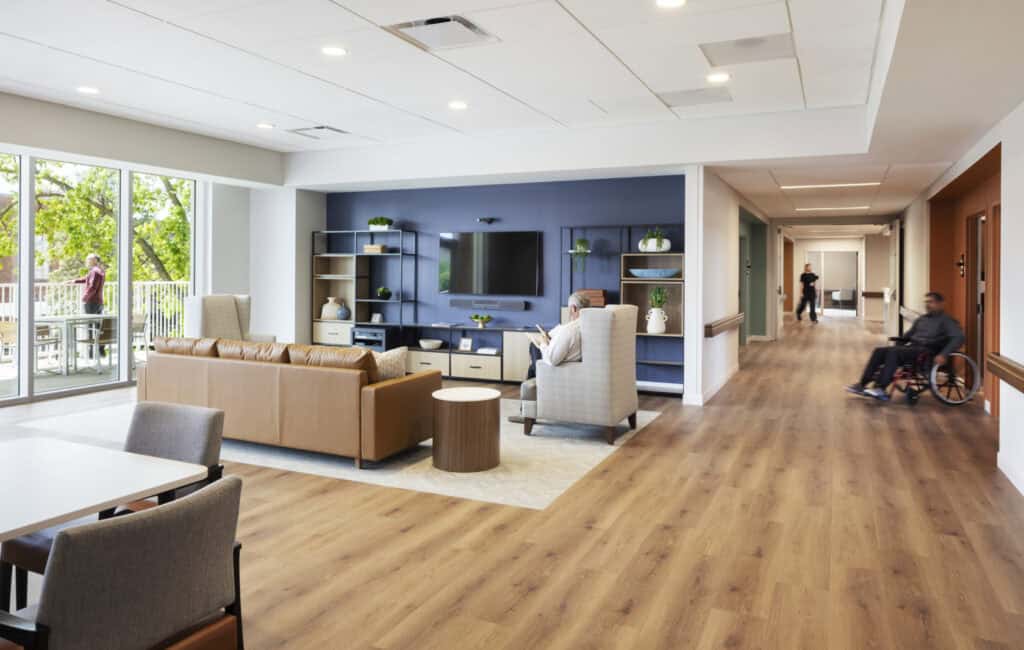
Photo: Illinois Veterans Home at Quincy, designed by Perkins Eastman.