
I recently came across a LinkedIn post by senior living marketing expert Dan Hutson where he asked the question, “What’s the job of senior living?”
Here’s an excerpt from his post:
Most operators think they’re being hired to provide care, safety and/or security,” he wrote. “In reality, the customer (either prospective resident or family member) is hiring a community to:
- Restore the parent/child relationship–a daughter wants to stop being mom’s care manager and be her daughter again.
- Eliminate the anxiety of “what if?”–a resident wants to stop worrying that a single fall will end their independence.
- Curate a social identity–a resident wants to hire a platform where they aren’t the “senior on the block,” but isntead someone who has a purpose in life, adds value to the lives of others, and is part of a vibrant, engaged community.
If your product doesn’t solve for these kinds of specific emotional jobs, no amount of marketing spend will fix your occupancy. Your product IS the marketing. Not your media buy. Not your website. Not your events.
Stop Building Amenities
He explained what this means by offering Airbnb and Peloton as examples of brands that are more obsessed with the job rather than the product. In Airbnb’s case, that job is to offer a local experience. For Peloton, it’s the high-energy boutique fitness classes buyers can access.
And if we apply this thinking to senior living, he argues, “We stop building ‘amenities’ and start building solutions.”
Instead of a theater or multi-purpose room, he suggests building a “lifelong learning hub that helps prevent cognitive decline through active engagement.” This could be a space that accommodates lectures, workshops, podcasting, digital learning, and creative production.
What Else?
Here are some other ideas:
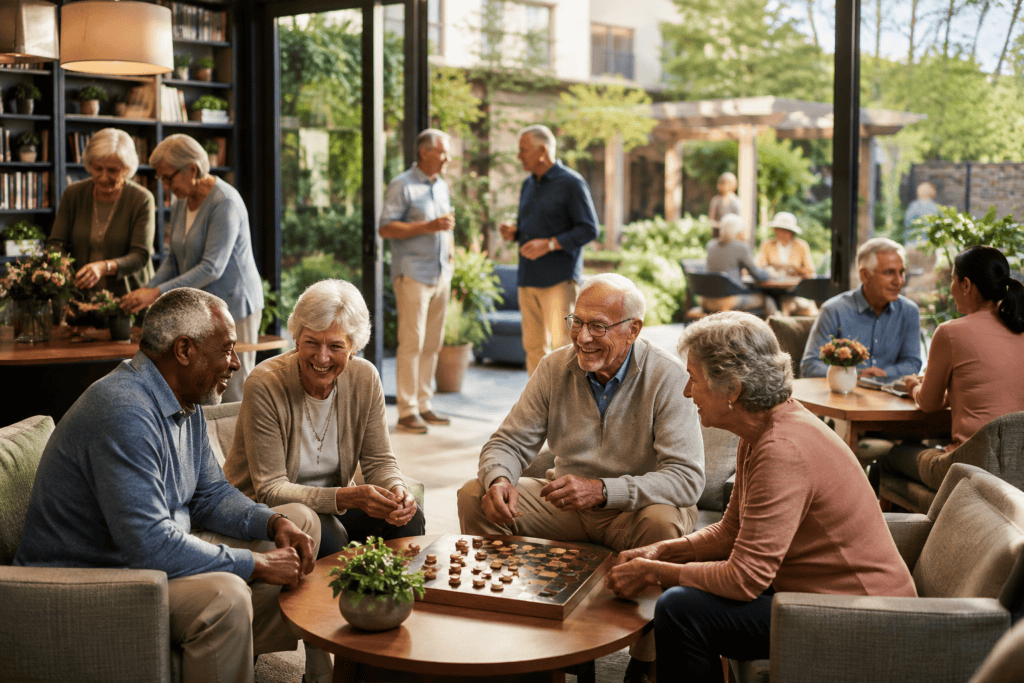
- Hospitality-inspired social spaces that people actually want to spend time in: ones with a wine bar feel, coffeehouse energy, library lounges, or indoor/outdoor transitions.
- Spaces that don’t just focus on entertainment, but are designed for mentoring, teaching, volunteering, gardening, making/artisan work, or intergenerational interactions.
- Spaces with a strong connection to nature that have views, gardens, walking paths, bird activity, seasonal change, or outdoor dining.
One final thought. If the real “job” of senior living design is to restore dignity, reduce anxiety, and create a sense of meaning and purpose, then every design decision—from materials to layout, furniture, lighting, and programming—has to support that.
P.S. Please do me a favor — if you liked this post and like this blog, please share it with others by sending them the link or posting it on your LinkedIn, X, or Facebook. Also, don’t forget to subscribe, so you’ll get emails when new content is posted. Thanks!